Anhoehe von Slane / Hill of Slane
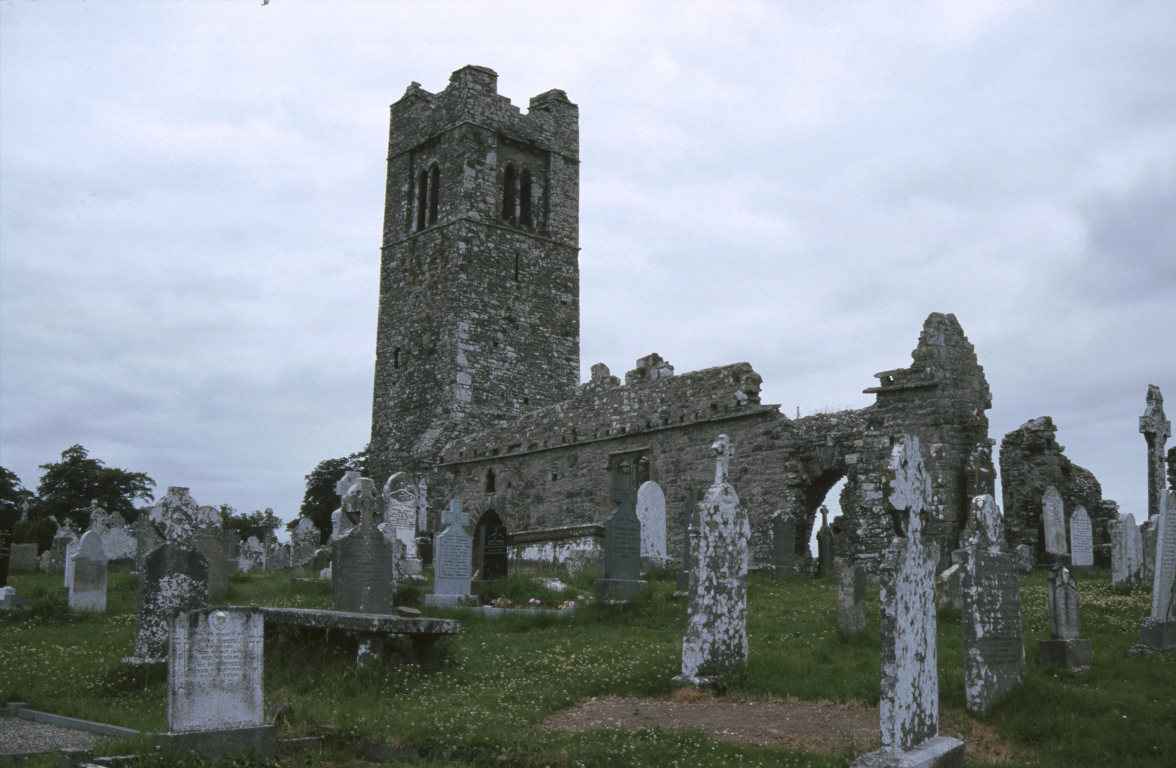
(2000-07-18)
Ein Hügel bei der Stadt Slane (Baile Shláine) war Teil eines Ereignisses von historischer Bedeutung: Nach alter Druidentradition wurde auf dem Hügel von Tara das Frühlingsfeuer entzündet. Der Heilige Patrick griff diese Tradition auf und entzündete auf dem Hügel im Jahr 432 sein eigenes Osterfeuer noch vor den Druiden, besiegte sie und festigte so die Vorherrschaft des Christentums in Irland.
Ab 500 n. Chr. wurde auf dem Hügel Kirchen und sogar ein Kloster erbaut, diese wurden jedoch durch wiederholte Plünderungen von Wikingern zerstört.
Die Kirche, deren Ruinen noch heute zu sehen sind, wurde vermutlich im 13. Jahrhundert errichtet und in späteren Jahrhunderten ausgebaut. Sie war bis in das 18. Jahrhundert in Verwendung.
A hill close the town of Slane (Baile Shláine) became part of an event of historical meaning: According to old druid tradition, a ceremonial bonfire was to be lighted on the Hill of Tara. Saint Patrick took up that tradition and lit his own fire on the hill on Easter Saturday of the year 432 before the druids, thereby won over them and consolidated the ascendancy of Christianity in Ireland.
Since about 500 A.D. churches and even a monastery were built on the hill, that whoever were raided by Vikings for several times and finally destroyed.
The ruined church that still exists was probably built in the 13th century and was extended in the centuries to come. It was in use unto the 18th century.
Anhöhe von Slane im Detail / Expand on Hill of Slane
Zugeordnete Themen / Assigned Topics:
Mehr Informationen über - Anhöhe von Slane / More information about - Hill of Slane
 curiousireland.ie/hill-of-slane-friary/ irelandinruins.blogspot.co.at/2012/02/hill-of-slane-friary-co-meath.html Wikipedia (en): The Hill of Slane www.boynevalleytours.com/hill-of-slane.htm www.meath.ie/tourism/heritage/heritagesites/hillofslane/ www.megalithicireland.com/Hill%20of%20Slane.html www.mythicalireland.com/ancientsites/slane/
Lage / Location
Irish grid: N 96215 75130


(© Wiki Commons)
- DM
- Donaghmore
- DW
- Dowth
- KN
- Knowth
- MB
- Monasterboice
- MF
- Mellifont Abbey
- NG
- Newgrange
- NV
- Navan